

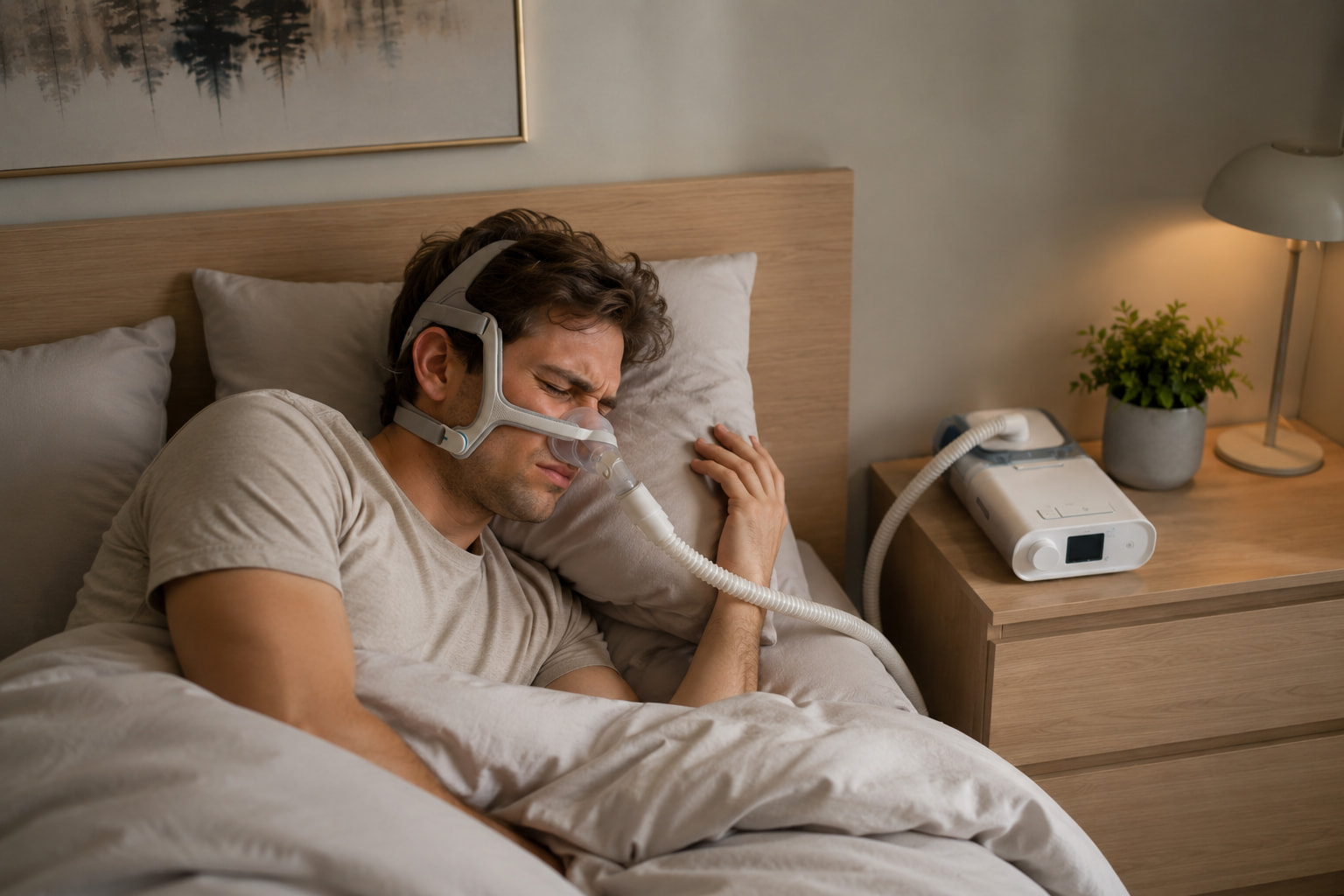
If your CPAP spends more time on the nightstand than on your face, the problem may not be that you “failed” treatment. It may mean you need to talk with your sleep provider about another way to keep your airway open at night.
CPAP remains an important and effective treatment for obstructive sleep apnea, especially in more severe cases. But it isn’t the only treatment available. For people looking for alternatives to CPAP in Wilmington, NC, options can include custom oral appliance therapy, positional or lifestyle changes for selected patients, and, in some cases, other medical or surgical treatments.
At Thrive Family Dental, the non-CPAP treatment we provide is custom oral appliance therapy. Dr. Ben Friberg has training in dental sleep medicine and works with patients who have a sleep apnea diagnosis or need help connecting with the appropriate provider for testing.
If CPAP isn’t working for you, there may be another path
The right alternative depends on why CPAP isn’t working, how severe your sleep apnea is, your anatomy, and your overall health. A treatment that works well for one person may not be appropriate for another.
Common non-CPAP approaches include:
- Custom oral appliance therapy
- Sleeping-position changes when positional apnea is part of the problem
- Healthy weight and lifestyle changes when they are medically relevant
- Certain surgical procedures or implanted nerve-stimulation devices for selected patients
Some people may also do better with another form of positive airway pressure, such as APAP or BPAP. Those are still PAP therapies, so your sleep physician should guide any change in pressure-based treatment.
Oral appliance therapy as a CPAP alternative in Wilmington, NC
Oral appliance therapy uses a custom device worn in the mouth during sleep. The appliance gently holds the lower jaw in a position that helps keep the upper airway from collapsing.
This is very different from buying a generic nightguard online. If you’re searching for a sleep apnea mouthguard in Wilmington, NC, what you’re looking for is a custom oral appliance designed and adjusted for sleep apnea treatment.
Sleep-medicine guidelines recognize oral appliances as a treatment option for adults with obstructive sleep apnea who can’t tolerate CPAP or prefer an alternative. Suitability still depends on your diagnosis and individual clinical situation.
Want to know whether an appliance could fit your treatment plan? Schedule a sleep apnea consultation and bring your sleep study if you already have one.
Why some people prefer an oral appliance
The biggest difference is obvious the first night you use one: there’s no mask covering your nose or mouth, no hose, and no bedside machine. A custom appliance also fits into a small case and doesn’t require electricity, which can make travel simpler.
Comfort is only useful if the treatment is actually doing its job. That’s why the process involves more than handing you a device and sending you home.
At our Wilmington office, we review your sleep study or help you take the next step toward getting one, digitally scan your mouth, have the appliance made for your bite, and adjust it for comfort and function. Follow-up sleep testing is used to confirm whether the therapy is reducing your apnea.
Oral appliance therapy isn’t the right answer for everyone
A sleep apnea dentist in Wilmington, NC plays a specific role in treatment. We fit and manage the oral appliance, but obstructive sleep apnea needs to be properly evaluated and diagnosed rather than treated based on snoring alone.
CPAP can remain the better option for some people, particularly depending on sleep apnea severity and other health factors. If an oral appliance isn’t producing the needed result, the answer is not to keep wearing an ineffective device. The treatment plan needs to be reassessed.
This is also why store-bought anti-snoring devices aren’t interchangeable with professionally managed oral appliance therapy. A custom appliance needs to fit your teeth and bite, be adjusted appropriately, and be followed over time.
What about positional therapy, weight changes, or surgery?
Other alternatives to CPAP exist, but they solve different problems. For some people, sleeping on the side instead of the back can reduce airway obstruction. Healthy weight management can also be part of treatment when weight contributes to obstructive sleep apnea.
For selected patients, medical specialists may discuss procedures such as upper-airway surgery, jaw advancement, or hypoglossal nerve stimulation. These treatments have their own eligibility requirements and are not dental treatments we provide at Thrive Family Dental.
The useful question isn’t “What is the best CPAP alternative?” It’s “Which treatment fits the reason my airway is closing and the severity of my sleep apnea?” That answer should come from the providers involved in your sleep care, not from an online product comparison.
Start with a sleep study, not a self-diagnosis
Loud snoring, waking up gasping, morning headaches, and feeling exhausted after a full night of sleep can all raise concern for sleep apnea. Symptoms alone, however, don’t tell you how many breathing interruptions are occurring or how severe the condition is.
A sleep study provides the information needed to confirm obstructive sleep apnea and guide treatment. If you already have a diagnosis and CPAP is sitting unused because you can’t tolerate it, bring that history into the conversation instead of simply abandoning treatment.
If you suspect sleep apnea but haven’t been tested, we can discuss your symptoms and help connect you with the next step. Our sleep apnea treatment process is built around knowing what we’re treating before an appliance is made.
What does getting a custom oral appliance involve?
The process starts with your sleep history, symptoms, goals, and sleep-study information. If oral appliance therapy is appropriate, we take a digital scan rather than relying on a store-bought mold.
Your appliance is then fabricated to fit your bite and position your jaw forward while you sleep. Once it arrives, we check the fit and make adjustments so the device is comfortable enough to wear consistently.
Treatment doesn’t end at delivery. We follow your response and use follow-up sleep testing to see whether the appliance is controlling the apnea as intended. If it isn’t, we can adjust the appliance or coordinate next steps with your sleep physician.
CPAP problems are a reason to talk, not a reason to stop treatment
Sleep apnea treatment only helps when the therapy is effective and you can use it consistently. If CPAP feels impossible because of the mask, noise, travel, discomfort, or another issue, that deserves a conversation rather than months of untreated sleep apnea.
For patients looking for oral appliance therapy in Wilmington, NC, Dr. Friberg can evaluate whether a custom device belongs in the plan and work through the fitting and follow-up process with you.
Schedule a sleep apnea consultation or call (910) 390-8469. We’ll talk through what you’ve tried, review the information you already have, and help you figure out the next appropriate step.